
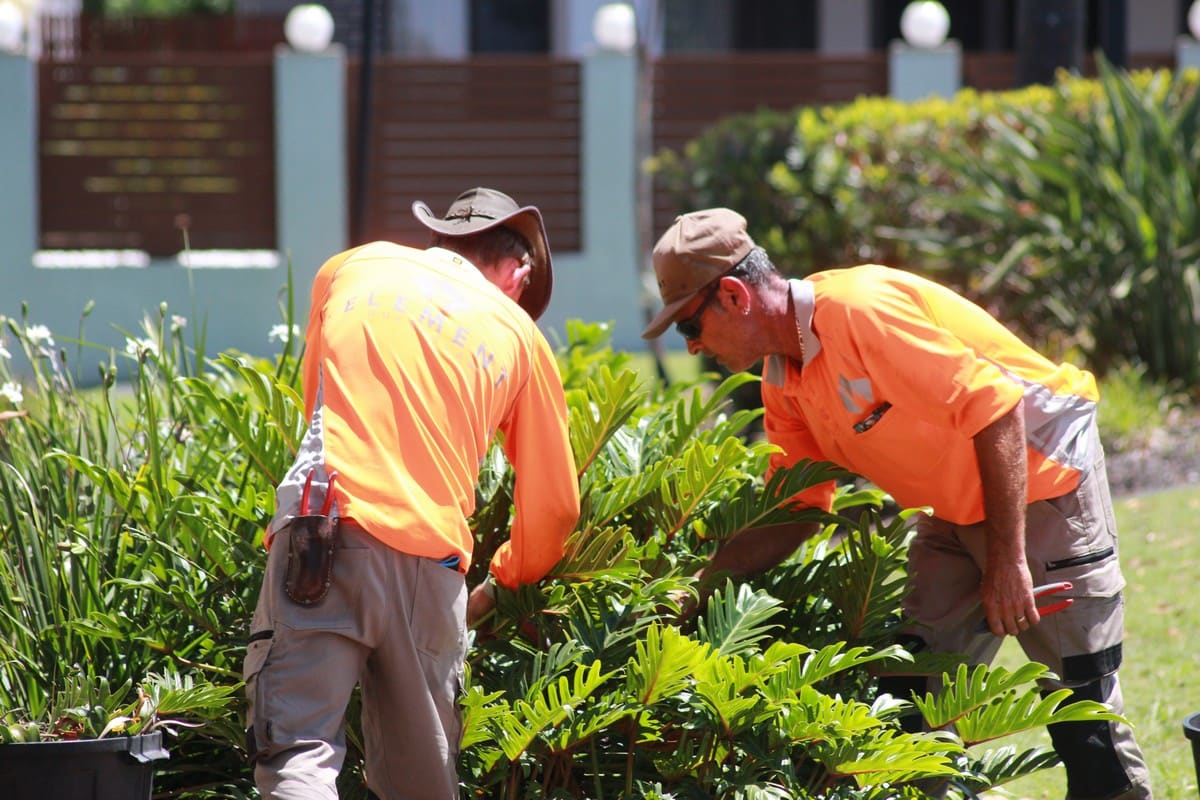

AS 4373 — Pruning of Amenity Trees is the Australian Standard that defines how mature, juvenile and remedial pruning should be carried out on amenity trees across the country. For property managers running commercial estates, councils maintaining streetscapes, or developers handing over completed sites, citing AS 4373 in a tender is one of the highest-impact moves you can make: it raises contractor quality, protects tree health, and gives you a defensible paper trail if a tree later fails or a limb drops.
Element Queensland prunes thousands of commercial trees each year across Brisbane, Moreton Bay and the Sunshine Coast. This guide distils what we've learnt about specifying, inspecting and paying for AS 4373 pruning so you get value — not just hours.
What AS 4373 actually covers
The standard is the rulebook for how cuts are made. It defines pruning types, where the cut should be placed relative to the branch collar, the maximum percentage of live crown that can be removed in a single operation, and the documentation that should accompany the work.
Formative pruning
Shaping juvenile trees in their first 5–7 years to develop a single dominant leader and balanced scaffold branches.
Crown thinning
Selective removal of secondary branches to reduce density without altering the overall crown shape or height.
Crown lifting
Removing the lowest branches to provide vehicle, pedestrian or sightline clearance.
Crown reduction
Reducing the height or spread of the crown back to suitable lateral growth points — never topping.
Deadwood removal
Removing dead, dying, diseased or damaged branches to reduce risk and improve appearance.
Selective / remedial
Targeted pruning to address conflicts (services, signs, lines) or to remediate previous poor work.
Why specifying AS 4373 matters in your tender
Every commercial pruning brief that lands on our desk without a standard reference reads the same way: “tidy up trees, remove dead wood, reduce overhanging branches.” That language gives a low-cost contractor licence to top, lion-tail or flush-cut trees — the three biggest causes of long-term decline. Citing AS 4373 forces a quality floor and lets your auditor reject substandard work.
Specification language we recommend:
“All pruning shall be carried out in accordance with AS 4373 — Pruning of Amenity Trees. Pruning type shall be specified per tree on the schedule. No pruning cut shall remove more than 15% of the live crown in a single operation. Topping, lion-tailing and flush cuts are expressly prohibited.”
The four cut quality checks any property manager can do
You don't need to be an arborist to spot poor cuts. After a pruning visit, walk the site with this checklist:
- Branch collar respected. Cuts should be made just outside the swollen branch collar — never flush against the trunk. A flush cut removes the tree's natural defence zone and invites rot.
- No stubs. The cut should not leave a visible stub protruding past the collar. Stubs die back and become entry points for decay.
- No bark tearing. Large branches should have been removed in three cuts (undercut, top cut, finish). Torn bark below the cut means the contractor skipped the undercut.
- Crown still balanced. Look up — does the canopy still look like a tree, or has it been “lion-tailed” with all interior growth stripped and a tuft of leaves on the tip? Lion-tailing concentrates wind load on the branch tips and dramatically increases failure risk.
How AS 4373 connects to risk and insurance
Public liability insurers increasingly ask whether tree maintenance has been carried out to Australian Standards. If a limb drops and causes injury or property damage, your defence rests on three documents:
- A current arborist inspection report for the failed tree.
- A pruning specification citing AS 4373 with the pruning type called out per tree.
- Completion records (photos, GPS, arborist sign-off) showing the work was performed to standard.
Together, these establish that you took reasonable care — the legal threshold for defending a negligence claim under Queensland's Civil Liability Act 2003.
What good AS 4373 reporting looks like
Every pruning visit Element Queensland completes returns the following to the asset owner:
| Item | Captured per tree |
|---|---|
| Tree ID / GPS | Asset register tag and coordinates |
| Species | Botanical and common name |
| Pruning type | AS 4373 code (e.g. crown lift, deadwood removal) |
| % live crown removed | Estimated by qualified arborist on site |
| Before / after photos | Wide and detail shot |
| Arborist sign-off | Name, AQF level, date |
Common pitfalls — and how to avoid them
Hiring on price alone with a vague scope. You'll get hours, not outcomes — and likely topping or lion-tailing.
Tender on AS 4373 spec, lump-sum per tree, with photo evidence required for each completion.
Annual blanket pruning of every tree. Wastes budget and stresses healthy trees.
Cyclical pruning informed by regular arborist inspections — typically every 3–5 years for mature trees.
Bringing it together for your portfolio
The cheapest tree pruning is rarely the cheapest tree maintenance over a decade. AS 4373 compliance, paired with cyclical arborist inspections and accurate asset records, keeps mature trees structurally sound, defends your duty of care, and avoids the eye-watering cost of replacing a 30-year-old streetscape tree that was killed by repeated topping.
Element Queensland's arborist team holds AQF Level 3 and 5 qualifications and prunes to AS 4373 as standard across our commercial tree maintenance contracts. If you'd like a sample AS 4373 specification for your next tender, get in touch and we'll send one over.
Need this work delivered on your site?
Element Queensland delivers commercial landscape services across Brisbane, Moreton Bay, the Sunshine Coast and beyond. Talk to our team about scope, scheduling and reporting.
Request a Quote