
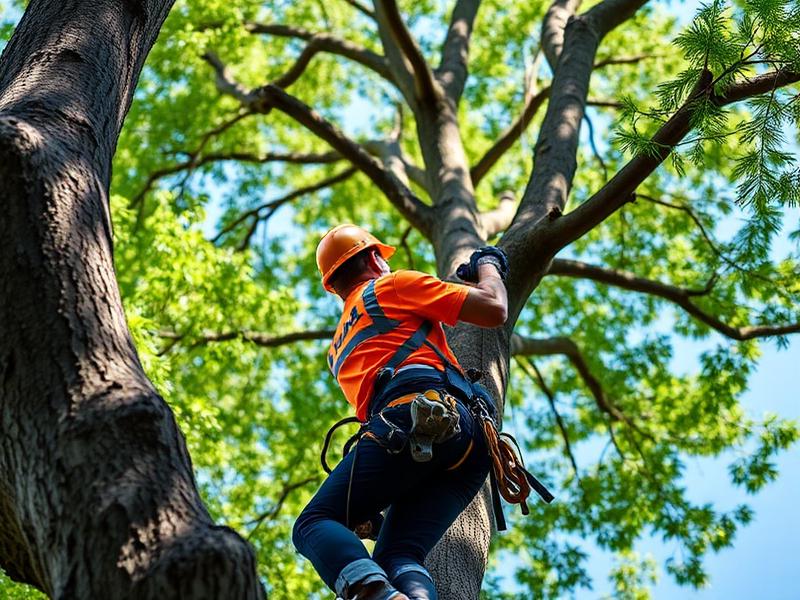

A Visual Tree Assessment (VTA) is the foundation of every credible commercial tree management programme. It's the inspection that drives your pruning schedule, your removal list, your insurance evidence and your capital-replacement budget. Skip it and every decision downstream is a guess.
For asset managers, councils and developers across Brisbane, Moreton Bay and the Sunshine Coast, this guide covers when a VTA should be commissioned, what a defensible report looks like, and how the findings flow through to your maintenance contract.
What a VTA actually is
A VTA is a structured, ground-based inspection of an individual tree by a qualified arborist. The arborist works through four zones in sequence — root collar, trunk, scaffold branches and crown — looking for visual indicators of structural defects, decay, disease, biomechanical stress or environmental damage. Findings are scored and a recommended action is assigned to each tree.
Root collar & buttress
Soil heave, fungal brackets, stem-girdling roots, mechanical damage from mowers or vehicles.
Trunk
Cavities, included bark, lean, cracks, response wood, fungal fruiting bodies, lightning strike scars.
Scaffold branches
Co-dominant stems, included bark unions, crossing branches, evidence of past failures.
Crown
Deadwood load, dieback, epicormic growth, asymmetry, wind exposure, target zones below.
When to commission a VTA
There are five common triggers across the commercial portfolios we work with:
- Cyclical programme. Annual or biennial inspections of trees in high-traffic zones (carparks, walkways, playgrounds, lifestyle centres).
- Post-event. After a significant storm, prolonged drought, fire or vehicle impact.
- Pre-development. Before any works inside the Tree Protection Zone of retained trees, paired with an AS 4970 tree protection plan.
- Pre-handover. When a developer hands a completed estate or precinct over to a council or body corporate.
- Reactive. When a property manager observes new dieback, lean, or fungal growth on a tree.
What a VTA report should contain
A defensible report — one your insurer and your lawyer will both accept — has these elements:
| Section | What it covers |
|---|---|
| Tree ID & GPS | Unique reference, coordinates, and asset register link |
| Species & DBH | Botanical name, diameter at breast height, height estimate |
| Site context | Target zone (occupancy and traffic below the crown) |
| Defects observed | Photo-documented findings across all four inspection zones |
| Risk rating | QTRA score or equivalent — likelihood × consequence |
| Recommended action | Retain, prune (AS 4373 type), monitor, or remove |
| Re-inspection interval | Months until next VTA |
| Arborist sign-off | Name, AQF level, qualifications, date |
How VTA findings flow into your maintenance contract
A VTA on its own is just paperwork. Its value is realised when the findings drive the rest of your maintenance programme:
Pruning schedule
Each “prune” recommendation feeds your annual pruning plan with the AS 4373 pruning type pre-specified per tree.
Removal & replacement budget
“Remove” recommendations populate next year's capital budget — including replacement planting and establishment care.
Risk register
High-risk trees flow into your live risk register so they're visible to executives, not buried in a PDF.
Where VTA stops — and where advanced testing begins
VTA is, by definition, a visual inspection. When a tree has visible defects but a high target value (e.g. a heritage tree above a busy carpark), the arborist may recommend escalating to advanced testing:
- Sonic tomography — maps internal decay through sound-wave imaging.
- Resistance drilling — measures wood density at depth.
- Aerial inspection — climber or EWP-based close inspection of upper crown.
- Static load testing — measures whole-tree response to applied force.
Common mistakes to avoid
Treating the VTA as a one-off audit rather than a cyclical programme.
Schedule cyclical re-inspection intervals per tree based on risk and target value.
Accepting a VTA without GPS data, photos and a clear action per tree.
Require a digital, photo-rich report that exports to your asset register.
Get your tree register working for you
Element Queensland's consulting arborists run cyclical VTA programmes for councils, developers and commercial estates across South East Queensland. The output is a digital tree register, an annual pruning plan aligned to AS 4373, and a defensible audit trail for your insurer.
Learn more about our commercial arborist services or get in touch to scope a VTA programme for your portfolio.
Need this work delivered on your site?
Element Queensland delivers commercial landscape services across Brisbane, Moreton Bay, the Sunshine Coast and beyond. Talk to our team about scope, scheduling and reporting.
Request a Quote